Get Smart
Follow GetSmart on Facebook
  • Home
  • k/s1
    • Maths >
      • Representing Whole Number >
        • Representing Whole Number-QR
      • Combining/Separating Quantities - Addition/Subtraction >
        • Combining/Separating Quantities - Addition/Subtraction-QR
      • Forming Groups - Patterns & Algebra >
        • Forming Groups - Patterns & Algebra-QR
      • Forming Groups - Multiplication & Division >
        • Forming Groups - Multiplication & Division with QR
      • Geometric Measure - Position >
        • Geometric Measure - Position - QR
      • Geometric Measure - Length >
        • Geometric Measure - Length - QR
      • Geometric Measure - (Length) Fractions >
        • Geometric Measure - (Length) Fractions - QR
      • 2 Dimensional Spatial Structure - 2D Shapes >
        • 2 Dimensional Spatial Structure - 2D Shapes QR
      • 2 Dimensional Spatial Structure - Area >
        • 2 Dimensional Spatial Structure - Area QR
      • 3 Dimensional Spatial Structure - 3D Objects >
        • 3 Dimensional Spatial Structure - 3D Objects - QR
      • 3 Dimensional Spatial Structure - Volume >
        • 3 Dimensional Spatial Structure - Volume - QR
      • Non Spatial Measure - Mass >
        • Non Spatial Measure - Mass - QR
      • Non Spatial Measure - Time >
        • Non Spatial Measure - Time QR
      • Data >
        • Data - QR
      • Chance >
        • Chance - QR
    • English >
      • Oral Language and Communication
      • Vocabulary/Phonological Awareness/Phonic Knowledge
      • Reading Fluency & Print Conventions >
        • Stories & Rhymes
      • Reading Comprehension
      • Creating Written Texts >
        • ...Writing Prompts
      • Spelling
      • Keyboarding/Handwriting
      • Understanding and Responding to Literature
    • Science and Technology >
      • ES1 - Earth and Space
      • S1 - Earth and Space
      • ES1 - Living World
      • S1 - Living World
      • ES1 - Material World
      • S1 - Material World
      • ES1 - Physical World
      • S1 - Physical World
      • ES1 - Digital Technologies
      • S1 - Digital Technologies
    • Hands On Science
    • History >
      • Personal & Family Histories
      • Present and Past Family Life
      • The Past In The Present
    • Geography >
      • People Live In Places
      • Features of Places
      • People and Places
    • K/S1 Art
    • How to....Art
    • How to....Craft
    • Music
    • Logic
  • s2
    • Maths >
      • Representing Number - Whole Number
      • Representing Number - Decimals
      • Additive Relations - Addition & Subtraction
      • Multiplicative Relations Multiplication & Division
      • Partitioned Fractions
      • Geometric Measure - Position
      • Geometric Measure - Length
      • Geometric Measure - Angles
      • 2 Dimensional Spatial Structure - 2D Space
      • 2 Dimensional Spatial Structure - Area
      • 3 Dimensional Spatial Structure - 3D Space
      • 3 Dimensional Spatial Structure - Volume
      • Non Spatial Measure - Mass
      • Non Spatial Measure - Time
      • Data
      • Chance
    • English >
      • Oral Language and Communication >
        • Oral Language and Communication Rubric Samples
      • Vocabulary
      • Reading Fluency
      • Reading Comprehension
      • Creating Written Texts >
        • ...Writing Prompts
      • Spelling
      • Handwriting/Keyboarding
      • Understanding and Responding to Literature
    • Science & Technology >
      • S2 - Earth and Space
      • S2 - Living World
      • S2 - Material World
      • S2 - Physical World
      • S2 - Digital Technologies
    • Hands On Science
    • History >
      • Community & Remembrance
      • First Contacts
    • Geography >
      • Places are Similar and Different
      • The Earth's Environment
    • Stage 2 Art
    • How to......Art
    • How to....Craft
    • Stage 2 Music
    • Stage 2 Logic
  • s3
    • Maths >
      • Representing Number - Whole Number
      • Representing Number - Decimals & Percentages
      • Additive Relations - Addition & Subtraction
      • Multiplicative Relations - Multiplication & Division
      • Representing Quantity Fractions
      • Geometric Measure - Position
      • Geometric Measure - Length
      • Geometric Measure - Angles
      • 2 Dimensional Spatial Structure - 2D Space
      • 2 Dimensional Spatial Structure - Area
      • 3 Dimensional Spatial Structure - 3D Space
      • 3 Dimensional Spatial Structure - Volume
      • Non Spatial Measure - Mass
      • Non Spatial Measure - Time
      • Data
      • Chance
    • English >
      • Oral Language and Communication
      • Vocabulary
      • Reading Comprehension
      • Creating Written Texts >
        • ...Writing Prompts
      • Spelling
      • Handwriting/Keyboarding
      • Understanding and Responding to Literature
    • Science & Technology >
      • S3 - Earth and Space
      • S3 - Living World
      • S3 - Material World
      • S3 - Physical World
      • S3 - Digital Technologies
    • Hands On Science
    • History >
      • The Australian Colonies
      • Australia As A Nation (Gov't)
    • Geography >
      • Factors That Shape Places
      • A Diverse And Connected World
    • Stage 3 Art
    • How to....Art
    • How to...Craft
    • Stage 3 Music
    • Stage 3 Logic
  • STEM...STEAM
  • Robotics/Coding
  • Australian Curriculum
    • English Curriculum Links
    • English Units
    • Maths
    • Science
    • History
    • NSW Curriculum ICT Capabilities
    • ICT Scope & Sequence
  • Cybersafety
  • GetEducreative
  • Themes
    • Antarctica
    • British Colonisation
    • Dinosaurs
    • Dragons
    • Electricity
    • Energy
    • Global Connections
    • Gold
    • Government
    • Human Body
    • Life Cycles
    • Light
    • Magnets
    • Mini Beasts
    • Rainforests
    • Space
  • Virtual Tours
  • Winter Olympics
Stage 2 History Unit

Community & Remembrance

On this page are links to: WebquestsUnits; Worksheets; 
Objectives: Students​
  • develop knowledge and understanding about the nature of history and key changes and developments from the past
  • develop knowledge and understanding about key historical concepts and develop the skills to undertake the process of historical inquiry

Stage 2 - Historical Concepts
  • Continuity and change: some things change over time and others remain the same, e.g aspects in the local community that have either changed or remained the same; changes to the lives of Aboriginal peoples with the arrival of the First Fleet.
  • Cause and effect: events, decisions or developments in the past that produce later actions, results or effects, e.g how conditions and decisions in Britain resulted in the journey of the First Fleet; causes of change in the local area/state.
  • Perspectives: people from the past will have different views and experiences, e.g views on the arrival of the British in Australia from a British and an Aboriginal point of view.
  • Empathetic understanding: developing an understanding of another's views, life and decisions made, e.g developing an understanding of the life and attitudes of an early colonist or convict.
  • Significance: importance of an event, development or individual/group, e.g the significance/importance of national days/holidays; the significance of the contributions of an early settler.

Stage 2 - Historical Skills
Comprehension: chronology, terms and concepts
  • respond, read and write, to show understanding of historical matters
  • sequence familiar people and events(ACHHS065, ACHHS081)
  • use historical terms(ACHHS066, ACHHS082)
Analysis and use of sources
  • locate relevant information from sources provided(ACHHS068, ACHHS084, ACHHS215, ACHHS216)
  • Perspectives and interpretations
  • identify different points of view within an historical context(ACHHS069, ACHHS085)
Empathetic understanding
  • explain how and why people in the past may have lived and behaved differently from today
Research
  • pose a range of questions about the past(ACHHS067, ACHHS083)
  • plan an historical inquiry
Explanation and communication
  • develop texts, particularly narratives(ACHHS070, ACHHS086)
  • use a range of communication forms (oral, graphic, written) and digital technologies(ACHHS071, ACHHS087)

Outcomes: A student
HT2-1
identifies celebrations and commemorations of significance in Australia and the world
HT2-2
describes and explains how significant individuals, groups and events contributed to changes in the local community over time
HT2-5
applies skills of historical inquiry and communication

Key inquiry questions:
  • Who lived here first and how do we know?
  • How has our community changed? What features have been lost and what features have been retained?
  • What is the nature of the contribution made by different groups and individuals in the community?
  • How and why do people choose to remember significant events of the past?

Content:
 The importance of Country and Place to Aboriginal and/or Torres Strait Islander peoples who belong to a local area. (ACHHK060)
Students:
  • identify the original Aboriginal languages spoken in the local or regional area
  • identify the special relationship that Aboriginal and/or Torres Strait Islander peoples have to Country and Place
  • respond to Aboriginal stories told about Country presented in texts or by a guest speaker
ONE important example of change and ONE important example of continuity over time in the local community, region or state/territory (ACHHK061)
Students:
  • using a range of sources, describe and explain how and why ONE area, eg transport, work, education, entertainment and daily life, has changed or ONE that has remained the same in the local area, region or state/territory since colonial times
The role that people of diverse backgrounds have played in the development and character of the local community (ACHHK062)
Students:
  • identify the various cultural groups that live and work in the local community
  • focusing on ONE group, investigate their diverse backgrounds and outline their contribution to the local community using a range of sources, eg photographs, newspapers, oral histories, diaries and letters
Days and weeks celebrated or commemorated in Australia (including Australia Day, ANZAC Day, Harmony Week, National Reconciliation Week, NAIDOC Week, National Sorry Day) and the importance of symbols and emblems (ACHHK063)
Students:
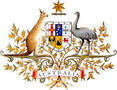
  • identify and describe local, state and national symbols and discuss the origins, symbolism and significance, eg the school logo, Australian and Aboriginal and Torres Strait Islander flags, coats of arms from states and Australia
  • identify important Australian celebrations and commemorations and discuss their origins and significance in society
Celebrations and commemorations in other places around the world; e.g, Bastille Day in France, Independence Day in the USA, including those that are observed in Australia, such as Chinese New Year, Christmas Day, Diwali, Easter, Hanukkah, the Moon Festival and Ramadan (ACHHK064)
Students:
  • identify global celebrations and commemorations, including those of the major world religions
  • describe the origin of these celebrations
https://educationstandards.nsw.edu.au/wps/portal/nesa/k-10/learning-areas/hsie/history-k-10/content/802

​NESA Sample Unit
history-st2-community_remembrance_sampleu.pdf
File Size: 114 kb
File Type: pdf
Download File


Teaching Stage 2 History:
Community and Remembrance - State Library
Sydney - A story of change
Billy Blue
Who was Quong Tart?
The world of Mickey of Ulladulla

Aboriginal Country
Aboriginal Country

Aboriginal Place Names
The first inhabitants - Mungo Man
Evidence of First Peoples
First Languages Interactive Map

Storytelling in Aboriginal and Torres Strait Islander cultures - preview before using clips

Cooking Food - past and present - abc video

Connection to Country

Aboriginal Art
Aboriginal Art

 Aboriginal Australia  - downloadable map
Indigenous Australia - Oral Traditions

Indigenous Australia - Oral Traditions

Dreamtime meaning
Dreamtime Symbols
The Dreamtime Chart - downloadable pdf
Traditional Aboriginal Music

In My Day - school in 1934 (video animation)
Signs of the past - Australian Curriculum

Picturecreative spirits
Meaning of land to Aboriginal people

​Relationships to country: Aboriginal people and Torres Strait Islander people
Aboriginal and Torres Strait Islanders Connection to Country
360 Aboriginal Storytelling - use 360 viewer to investigate the areas whilst listening to the storyteller

Australian Symbols and Emblems
Picture
National Symbols - PEO

Flag, Anthem and emblems of Australia - kidcyber
Picture
National symbols


Australian Celebrations and Commemorations
Special Celebrations - Australian Curriculum


Melbourne Cup Day
Melbourne Cup Day

Melbourne Cup Day Printables,  Worksheets and Activities
 - handmadekids
 - twinkl
Picture
Australia Day
Australia Day

Anzac Day
Anzac Day

Harmony Day
Harmony Day

Harmony Day Printables,  Worksheets and Activities
 - harmony.gov
 - forteachersforstudents
NAIDOC Week
NAIDOC Week

NAIDOC Week Printables,  Worksheets and Activities
 - cleverpatch
 - teachstarter (free download)

National Sorry Day
Sorry Day Printables,  Worksheets and Activities
 - teachstarter (art)
 - twinkl
 - pinterest 

World Celebrations and Commemorations
Bastille Day
Bastille Day

Bastille Day Celebrations in Sydney

Bastille Day Printables,  Worksheets and Activities
 - dltk-kids
 - abcteach
 - kidsconnect
Independence Day - 4th July


Independence Day Printables,  Worksheets and Activities
 - teacherplanet
 - Crayola Colouring
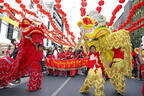
Chinese New Year
Chinese New Year

World International Days - UN list


Programming Template
Your browser does not support viewing this document. Click here to download the document.
updated Feb 2022
Powered by Create your own unique website with customizable templates.