Get Smart
Follow GetSmart on Facebook
  • Home
  • k/s1
    • Maths >
      • Representing Whole Number >
        • Representing Whole Number-QR
      • Combining/Separating Quantities - Addition/Subtraction >
        • Combining/Separating Quantities - Addition/Subtraction-QR
      • Forming Groups - Patterns & Algebra >
        • Forming Groups - Patterns & Algebra-QR
      • Forming Groups - Multiplication & Division >
        • Forming Groups - Multiplication & Division with QR
      • Geometric Measure - Position >
        • Geometric Measure - Position - QR
      • Geometric Measure - Length >
        • Geometric Measure - Length - QR
      • Geometric Measure - (Length) Fractions >
        • Geometric Measure - (Length) Fractions - QR
      • 2 Dimensional Spatial Structure - 2D Shapes >
        • 2 Dimensional Spatial Structure - 2D Shapes QR
      • 2 Dimensional Spatial Structure - Area >
        • 2 Dimensional Spatial Structure - Area QR
      • 3 Dimensional Spatial Structure - 3D Objects >
        • 3 Dimensional Spatial Structure - 3D Objects - QR
      • 3 Dimensional Spatial Structure - Volume >
        • 3 Dimensional Spatial Structure - Volume - QR
      • Non Spatial Measure - Mass >
        • Non Spatial Measure - Mass - QR
      • Non Spatial Measure - Time >
        • Non Spatial Measure - Time QR
      • Data >
        • Data - QR
      • Chance >
        • Chance - QR
    • English >
      • Oral Language and Communication
      • Vocabulary/Phonological Awareness/Phonic Knowledge
      • Reading Fluency & Print Conventions >
        • Stories & Rhymes
      • Reading Comprehension
      • Creating Written Texts >
        • ...Writing Prompts
      • Spelling
      • Keyboarding/Handwriting
      • Understanding and Responding to Literature
    • Science and Technology >
      • ES1 - Earth and Space
      • S1 - Earth and Space
      • ES1 - Living World
      • S1 - Living World
      • ES1 - Material World
      • S1 - Material World
      • ES1 - Physical World
      • S1 - Physical World
      • ES1 - Digital Technologies
      • S1 - Digital Technologies
    • Hands On Science
    • History >
      • Personal & Family Histories
      • Present and Past Family Life
      • The Past In The Present
    • Geography >
      • People Live In Places
      • Features of Places
      • People and Places
    • K/S1 Art
    • How to....Art
    • How to....Craft
    • Music
    • Logic
  • s2
    • Maths >
      • Representing Number - Whole Number
      • Representing Number - Decimals
      • Additive Relations - Addition & Subtraction
      • Multiplicative Relations Multiplication & Division
      • Partitioned Fractions
      • Geometric Measure - Position
      • Geometric Measure - Length
      • Geometric Measure - Angles
      • 2 Dimensional Spatial Structure - 2D Space
      • 2 Dimensional Spatial Structure - Area
      • 3 Dimensional Spatial Structure - 3D Space
      • 3 Dimensional Spatial Structure - Volume
      • Non Spatial Measure - Mass
      • Non Spatial Measure - Time
      • Data
      • Chance
    • English >
      • Oral Language and Communication >
        • Oral Language and Communication Rubric Samples
      • Vocabulary
      • Reading Fluency
      • Reading Comprehension
      • Creating Written Texts >
        • ...Writing Prompts
      • Spelling
      • Handwriting/Keyboarding
      • Understanding and Responding to Literature
    • Science & Technology >
      • S2 - Earth and Space
      • S2 - Living World
      • S2 - Material World
      • S2 - Physical World
      • S2 - Digital Technologies
    • Hands On Science
    • History >
      • Community & Remembrance
      • First Contacts
    • Geography >
      • Places are Similar and Different
      • The Earth's Environment
    • Stage 2 Art
    • How to......Art
    • How to....Craft
    • Stage 2 Music
    • Stage 2 Logic
  • s3
    • Maths >
      • Representing Number - Whole Number
      • Representing Number - Decimals & Percentages
      • Additive Relations - Addition & Subtraction
      • Multiplicative Relations - Multiplication & Division
      • Representing Quantity Fractions
      • Geometric Measure - Position
      • Geometric Measure - Length
      • Geometric Measure - Angles
      • 2 Dimensional Spatial Structure - 2D Space
      • 2 Dimensional Spatial Structure - Area
      • 3 Dimensional Spatial Structure - 3D Space
      • 3 Dimensional Spatial Structure - Volume
      • Non Spatial Measure - Mass
      • Non Spatial Measure - Time
      • Data
      • Chance
    • English >
      • Oral Language and Communication
      • Vocabulary
      • Reading Comprehension
      • Creating Written Texts >
        • ...Writing Prompts
      • Spelling
      • Handwriting/Keyboarding
      • Understanding and Responding to Literature
    • Science & Technology >
      • S3 - Earth and Space
      • S3 - Living World
      • S3 - Material World
      • S3 - Physical World
      • S3 - Digital Technologies
    • Hands On Science
    • History >
      • The Australian Colonies
      • Australia As A Nation (Gov't)
    • Geography >
      • Factors That Shape Places
      • A Diverse And Connected World
    • Stage 3 Art
    • How to....Art
    • How to...Craft
    • Stage 3 Music
    • Stage 3 Logic
  • STEM...STEAM
  • Robotics/Coding
  • Australian Curriculum
    • English Curriculum Links
    • English Units
    • Maths
    • Science
    • History
    • NSW Curriculum ICT Capabilities
    • ICT Scope & Sequence
  • Cybersafety
  • GetEducreative
  • Themes
    • Antarctica
    • British Colonisation
    • Dinosaurs
    • Dragons
    • Electricity
    • Energy
    • Global Connections
    • Gold
    • Government
    • Human Body
    • Life Cycles
    • Light
    • Magnets
    • Mini Beasts
    • Rainforests
    • Space
  • Virtual Tours
  • Winter Olympics
Teachers and Caregivers are advised to review sites, before use, to assess suitability and to monitor advertising.
S3 - Reading Comprehension
Aligned to the NSW Syllabus for The Australian curriculum (https://educationstandards.nsw.edu.au/wps/portal/nesa/home)
- outcomes and content listed at bottom of page
*Grapheme-Phoneme and Morphemes - see Vocabulary resources
*Morphology and Etymology - see Vocabulary resources
Online Texts
Storyline Online
Storyline Online - storyline

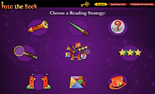
Into the book
Into the book - reading.ecb
- summarising
- visualising
- questioning
- evaluating
- synthesising
- prior knowledge
- making connections
​- inferring

Picture
Oxford Owl free e-books (free to join)

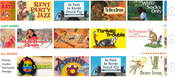
Mighty Book Collection
Mighty Book Collection - mightybook

Greek Myths
Greek Myths - more2.starfall

PictureImage by OpenClipart-Vectors from Pixabay
Funbrain online books for K-6 
Books for older readers
Books for older readers - magickeys

Treasure Island
"Robert Louis Stevenson's famous tale of pirates and treasure is told in 10 video clips. Young Jim Hawkins has a dull life working hard in the inn owned by his mother. But he dreams of adventure..."
https://www.bbc.co.uk/teach/school-radio/english-ks2-treasure-island/zn4fpg8
map
Macbeth
"Macbeth and his comrade, Banquo, are returning from battle when they meet three strange creatures, the 'Weird Sisters'..."
https://www.bbc.co.uk/teach/school-radio/english-ks2-macbeth-index/zkxcbdm
cauldron
Image by Nina Garman from Pixabay
knight
Sir Gawain and The Green Knight
" It is Christmas at Camelot and King Arthur and his court are celebrating. But the festivities are about to be interrupted..."
https://www.bbc.co.uk/teach/school-radio/english-ks2-gawain-and-the-green-knight-index/zhpkcqt

Viking Sagas
"Watch stories from Norse mythology told in a fun but faithful style. Features Odin, Loki, Freya, Thor and many other gods, goddesses, giants and an array of unusual creatures!"
https://www.bbc.co.uk/teach/school-radio/english-ks1-english-viking-sagas/zkyqd6f
ship
ShakespeareImage by WikiImages from Pixabay
Shakespeare Retold

PictureImage by OpenClipart-Vectors from Pixabay
 A Midsummer Night's Dream by William Shakespeare - BBC Teach (See sequencing below for associated activity)

ship
The Tempest
" A ship returning from Africa is caught in a ferocious storm. On a nearby island Prospero, once Duke of Milan, has plans for those on board..."
https://www.bbc.co.uk/teach/school-radio/english-ks2-the-tempest-index/zfdshbk

Picture
Carrie's WarImage by Gordon Johnson from Pixabay
Carrie's War - bbc

A Christmas Carol
A Christmas Carol - bbc

King Midas and The Golden Touch
King Midas and The Golden Touch - bbc

War Horse
War Horse - bbc

The Wind In The Willows
The Wind In The Willows - bbc

Talking Poetry
Talking Poetry - bbc

Oliver Twist
Oliver Twist - bbc

Let's Explore Poets, Collections and Interviews - Children's Poetry Archive 
- an interesting site where you can find different themes and styles of poetry
Picture
Picture
Cause and Effect
Looking at Cause and Effect Printables - K12 Reader
Ways to Teach Cause and Effect in Reading and Writing (literacyideas.com)
5th Grade Cause and Effect worksheets - Education.com
Cause and Effect worksheets and online exercises (liveworksheets.com)
10 Free Cause and Effect Worksheets [PDF] - EduWorksheets
6th Grade Cause and Effect worksheets - Education.com
Cause and effect practice worksheets - K5 Learning
Picture
Characters
Character Descriptions Examples and Worksheets - K12Reader
Character Traits Examples and Worksheets - K12Reader
What is characterisation? - BBC Bitesize
Characterization Worksheets - Ereading 
Character Web Template - (twinkl.com.au) subscription needed
Character Development - (easyteacherworksheets.com)
Picture
Compare and Contrast
5th Grade Compare and Contrast worksheets - Education.com - 
6th Grade Compare and Contrast worksheets - Education.com
Compare and contrast worksheets - K5 Learning
Compare and Contrast - printables (easyteacherworksheets.com)
Picture
Comprehension
Mr Nussbaum's Online Reading Comprehensions - Grade 5
books
36 Year 5 Reading Comprehension Printables from K12 reader

12 Year 6 Reading Comprehension Printables from K12 reader

IXL - Reading comprehension - various activities
Reading Comprehension - Online or Printable (ereadingworksheets.com)
Mr Nussbaum's Online Reading Comprehensions - Grade 6
books
Reading Comprehension Strategies (literacyideas.com)
5th Grade Reading Comprehension Strategy - worksheets Education.com
6th Grade Reading Comprehension Strategy worksheets - Education.com
Picture
Context Clues
IXL - Context clues activities
Picture
Picture
Context Clues Worksheets from K12 Reader
Context clues worksheets for grade 5 - K5 Learning
Picture
Fact and Opinion
Fact and Opinion: Guide (literacyideas.com)
5th Grade Fact Vs. Opinion worksheets - Education.com
Fact and Opinions Worksheets from K12 Reader
IXL - Opinions and arguments
6th Grade Fact Vs. Opinion worksheets - Education.com
Fact or opinon worksheets - K5 Learning
Fact or Opinion - (easyteacherworksheets.com)
Picture
Fake News
Critical Thinking Skills and Fake News (literacyideas.com)
Fake News in the Real World | (literacyideas.com)
How to Spot Fake News: Guide (literacyideas.com)
The Great Moon Hoax of August 1835 - HowStuffWorks
Picture
Figurative Language
Inferences
IXL - Figurative language
Picture
Figurative Language Worksheets - K5 Learning
Inference Skills and Inferring: Guide (literacyideas.com)
Inferences Worksheets from K12 Reader
5th Grade Making Inferences worksheets - Education.com
6th Grade Making Inferences worksheets - Education.com
Drawing Conclusions Worksheets from K12 Reader
Inferences - (easyteacherworksheets.com)
Figurative Language - (easyteacherworksheets.com)
Figurative Language Worksheets - (ereadingworksheets.com)
Picture
Genres
5th Grade Reading Genres and Type worksheets - Education.com
IXL - Literary texts
Genre Worksheets - Ereading 
IXL - Informational texts
6th Grade Reading Genres and Type worksheets - Education.com
Quia - The Genre Game - play online
Guess The Book Genre - Baamboozle - online game
Picture
Main Idea
Ways to identify the main idea of a story: Reading Strategies (literacyideas.com)
Main Idea Worksheets from K12 Reader
Picture
IXL - Main - various activities

5th Grade Identifying the Main Idea - worksheets Education.com
10 Free Main Idea Worksheets [PDF] - EduWorksheets
Picture
IXL - Informational texts

6th Grade Identifying the Main Idea worksheets - Education.com
Quia - Main Idea - Mr. Bruce's "Main Idea Millionaire"
Picture
Main ideas, details & summary worksheets - K5 Learning
Main idea - interactive or printable games (jeopardylabs.com)
Picture
Media Literacy
Media Literacy: Guide (literacyideas.com)
Media Literacy Worksheets (worksheetplace.com)
Media Literacy Week - MediaSmarts (23rd - 27th October 2023)
Printable activities for 3-6 -  MediaSmarts
Media literacy key concepts - MediaSmarts
Break the Fake: What’s real online? - MediaSmarts
Behaving Ethically Online -  MediaSmarts
Picture
Point of View
Point of View in Literacy: Guide (literacyideas.com)
Point of View Game - Group sort (wordwall.net)
Point of View Worksheets free - EduWorksheets
Point of View Worksheets from K12 Reader
Point of View Activities - (ereadingworksheets.com)
Newspaper report (scootle.edu.au) -
see also Creating Written Texts
Picture
Research
Research Strategies (literacyideas.com)
How to help your child develop research skills - TheSchoolRun
Research Skills - Note Taking | Teach Starter
Citing Sources - Bibliography
Citing Sources Worksheets (easyteacherworksheets.com)
Creating a Bibliography: Lesson for Kids - Video & Lesson Transcript - Study.com (requires sign up)
Picture
Sequencing
Sequencing in Reading and Writing: Guide (literacyideas.com)
Sequencing - worksheets and online exercises (liveworksheets.com)
5th Grade Sequencing Events worksheets - Education.com - downloadable worksheets
sequencing_activity.pdf (bbci.co.uk) (see Midsummer Night's Dream above)
6th Grade Sequencing Events worksheets - Education.com
Grade 5 Sequencing Worksheets - K5 Learning
Picture
Story Elements
Teaching Story Elements: Guide (literacyideas.com)
Elements of a story worksheet - K5 Learning
Eight Elements of a Story - (twinkl.com.au) (subscription required)
Story Elements Worksheets - Reading Skills (k12reader.com)
Anchor Charts for Teaching Story Elements - We Are Teachers
Picture
Syllabus Outcomes
EN3-RECOM-01 Fluently reads and comprehends texts for wide purposes, analysing text structures and language, and by monitoring comprehension
Content
Reading fluently
  • Syllabify, blend grapheme–phoneme correspondences and use morphemic knowledge as strategies for reading words accurately
  • Adjust reading rate to suit the purpose for reading and the complexity of the text
  • Adjust prosodic reading to enhance meaning and engage an audience
  • Efficiently follow signposting features to navigate print and digital texts

Reading for interest and wide purposes
  • Select, compare and reflect on texts read for personal interest
  • Reflect on reading experiences and identify texts and language features that are enjoyable
  • Select texts from print or digital sources to gather and organise research on a topic
  • Use criteria to determine the accuracy and reliability of sourced information
  • Adjust reading approach to suit the purpose for reading
  • Bring subject vocabulary, technical vocabulary, background knowledge and conceptual knowledge to new reading tasks
  • Compare and evaluate print and digital texts for their pertinence to a task, their authority and their level of detail
  • Use and compare different texts on similar themes or topics to synthesise ideas or information

Comprehending text structures and features
  • Use knowledge of text structure to navigate the text to locate specific information
  • Analyse how the integration of persuasive, informative and/or narrative structures within a text can enhance effect
  • Compare purposes for different texts and consider why authors and illustrators have structured texts in particular ways
  • Analyse use of multimodal features to enhance meaning within texts

Comprehending language
  • Use morphology and etymology to work out the meaning of unfamiliar words
  • Describe how own mental model is adjusted as new words and information deepen understanding during reading
  • Explain how language evokes responses when reading
  • Explain how modality can have subtle impacts on the meanings of words and contribute to deeper understanding when reading
  • Identify lexical cohesive devices used by the author that support understanding when reading
  • Recognise that anaphors, such as pronouns and verb phrases, take their meanings from other parts of a text to support inference
  • Identify cause and effect, using knowledge of causal connectives
  • Understand that sentence openers signal what the sentence will be about, and that the rest of the sentence can provide new information
  • Analyse how the meanings of key words and phrases in sentences and across a text support local and global inferencing when reading
  • Recognise that personal narratives contain more subjective language, but factual accounts of events contain more objective language
  • Compare and evaluate subjective and objective language to identify bias
  • Recognise that a sequence of clauses may use different tenses but remains connected throughout a topic or section of text

Monitoring comprehension
  • Analyse how language, background and vocabulary knowledge, and inferencing are used together to effectively build and adjust a mental model prior to and during reading
  • Monitor and repair reading when meaning breaks down
  • Evaluate the effectiveness of comprehension strategies used to support reading and interpretation of texts
  • Ask questions to clarify thinking, and to provide reasons or evidence
  • Question the assertions made by authors when engaging with print and digital texts
  • Check the accuracy of own recorded gist statements made during reading, before summarising information to determine a text’s main themes, ideas or concepts
  • Categorise information or ideas and create hierarchies to aid recall and support summarisation
  • Synthesise summaries of multiple texts and share information with peers to generate, compare and contrast new conceptual understandings
  • Reflect on personal connections with a text and identify how interests and experiences can influence understanding and appreciation of ideas presented
  • Generate, monitor and adjust own goals for improving oral reading fluency and silent reading fluency
​source: ​English K–10 - Course overview | NSW Curriculum | NSW Education Standards Authority
updated Feb 2026
Please note that these pages contain a collection of links to activities intended to support and enhance classroom teaching and learning. The thumbnails and activities are the property of the authors/creators and are available due to their generosity in sharing their work. 
All external links are intended for educational purposes only. The curator of this site is not responsible for questionable or controversial content/material which may be found on external sites.
Parental supervision of children's access to the internet and adult previewing of links is highly recommended.
Powered by Create your own unique website with customizable templates.